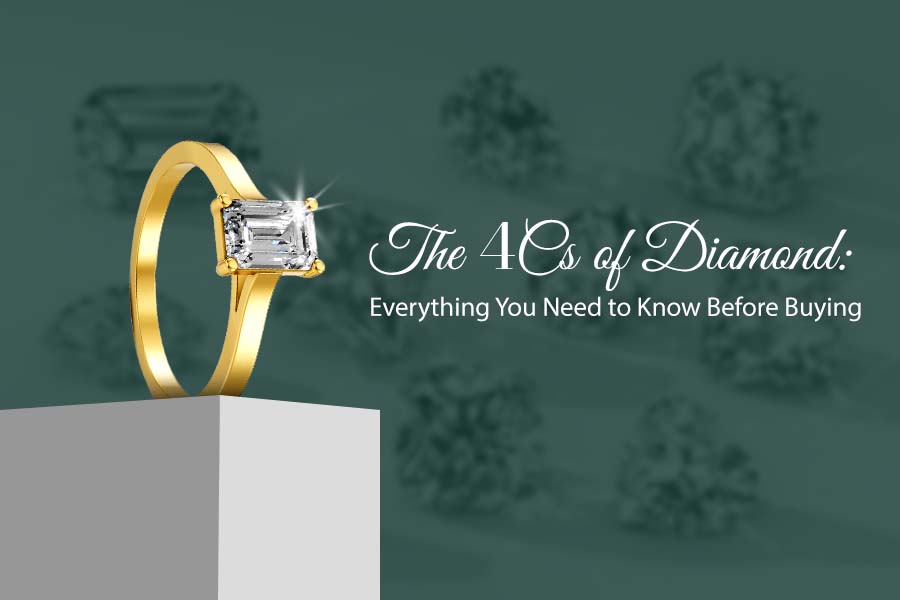
The 4Cs of Diamond: Everything You Need to Know Before Buying
Introduction
We can be passionate about many things, jewelry, watches, books, and more. But instead of blindly hoarding them, it is crucial to have knowledge about them, which can enhance our buying decisions. When we talk about diamonds, whether we are choosing a diamond for an engagement ring, a gift, or a piece of investment jewelry, the most important thing to know is the 4Cs of diamonds. These four attributes—Cut, Color, Clarity, and Carat Weight—are the international standard for assessing a diamond's beauty, rarity, and value. Created by a renowned global institute, the 4Cs grading system enables consumers to make confident, informed decisions.
In this guide, we will talk about each attribute in detail and share fruitful tips that will assist you in choosing the ideal diamond for your budget and taste.
What Are the 4Cs of Diamond?
The 4Cs of diamond—Cut, Color, Clarity, and Carat Weight—are the global standard for judging a diamond’s quality and value.
- Cut: It determines how well the diamond reflects light. A well-cut diamond sparkles brilliantly.
- Color: It measures how colorless the diamond is. The less color, the higher the grade.
- Clarity: It refers to the purity of the diamond. Fewer flaws mean a clearer, more valuable stone.
- Carat Weight: It indicates the diamond’s size by weight. Larger diamonds are rarer and more expensive.
Together, the 4Cs help you evaluate a diamond's beauty, brilliance, and price. Knowing them ensures you make a smart, confident choice.
1. Diamond Cut: The Sparkle Factor
Diamond cut is likely to be the most significant of the four Cs. It doesn't refer to the shape of the diamond (such as round or princess), but how effectively it has been faceted, polished, and proportioned to refract light. An efficiently cut diamond traps and reflects light well, giving the sparkle and fire that diamonds are renowned for.
Types of Cut Quality:
- Excellent Cut: Maximizes brilliance and fire; top-tier sparkle
- Very Good Cut: Radiant sparkle but slight variation from ideal proportions
- Good Cut: Reasonable light return but reduced brilliance
- Fair/Poor Cut: Slightly dull or lifeless sheen
Cut is the most influential aspect of a diamond's appearance of all the Cs. A high-carat, flawless diamond can appear dull if it's poorly cut.
2. Diamond Color: The Less, The Better
Less is more when it comes to diamond color. The finest diamonds are utterly colorless, and more light will be able to travel through them and bounce off brilliantly. Diamonds are rated on a color scale from D to Z, with D being perfectly colorless and Z having a visible yellow or brown tint.
Diamond Color Grading:
- D–F: Colorless – Rare and most expensive
- G–J: Close to Colorless – Trace of color, yet still seems white to the eye
- K–M: Pale Color – Noticeable tint, yet only apparent in larger stones
- N–Z: Light Color – Evident color, typically not ideal for jewelry
If your diamond is to be mounted in yellow or rose gold, near-colorless diamonds (G–J) provide excellent value without sacrificing beauty.
3. Clarity of Diamond: Natural Impurities and Their Influence
Clarity refers to the number, size, and position of natural inclusions (internal flaws) and blemishes (external flaws) in a diamond. They develop during the natural growth process of the diamond deep beneath the crust of the Earth.
Clarity Scale:
- FL (Flawless): No blemishes or inclusions visible under 10x magnification
- IF (Internally Flawless): Minor external blemishes only, no inclusions
- VVS1–VVS2: Very, Very Slightly Included; inclusions are very difficult to find
- VS1–VS2: Very Slightly Included; inclusions are small and not visible to the naked eye
- SI1–SI2: Slightly Included; inclusions might be seen under close examination
- I1–I3: Included; visible imperfections that have the potential to reduce transparency and brilliance
For the majority of buyers, VS2 or SI1 clarity provides the best value—they look clean to the eye but are much cheaper than perfect diamonds.
4. Diamond Carat Weight: The Size You See
Carat weight is the most common measurement used to quantify the weight of a diamond. One carat weighs 200 milligrams. Although it's sometimes synonymous with the size of the diamond, two diamonds of equal carat may differ in size due to cut quality and shape.
Common Carat Sizes:
- 0.25 – 0.50 carat: Ideal for minimalist designs
- 0.75 – 1.00 carat: Traditional engagement ring size
- 1.50 – 2.00+ carats: Bigger, statement rings
Remember that prices don't increase linearly—larger carat diamonds are more scarce and significantly pricier per carat.
Pro Tip: Opt for a diamond slightly shy of a milestone (e.g., 0.90 ct instead of 1 ct) for better value without sacrificing visual presence.
Why the 4Cs Are Important When Purchasing a Diamond
Each of the 4Cs has an important role to play in determining how much a diamond is worth and how pretty it is. Knowing these four factors will assist you:
- Make more intelligent buying decisions
- Optimize budget versus quality expectations
- Compare diamonds across brands and jewelers
- Understand pricing and steer clear of marketing tricks
Tips on Buying the Best Diamond: A Smart Buyer's Guide
Whether you're a bride-to-be searching for an engagement ring or someone looking for a forever gift, buying the ideal diamond can be daunting. To simplify your choice (and make it smarter), consider the following five expert tips to ensure you get the best shine for your dollar, without compromising on beauty and quality.
Cut Comes First: Sparkle Over Size
Cut is the top consideration when it comes to the quality of a diamond, even more so than clarity or size. A very well-cut diamond reflects light beautifully, and you get that classic fire and sparkle. Even a large diamond with a bad cut will appear dull.
Tip: Always opt for Excellent or Very Good cut quality. It's the secret to a really beautiful diamond.
Color Isn't Everything: Match It to the Metal
The color of diamonds is graded from D (colorless) to Z (distinctive yellow hue). D–F grades are premium, but most individuals are unable to distinguish among them and the lower grades like G–H.
If you're placing your diamond in rose or yellow gold, you might as well opt for a near-colorless diamond (G–J) without visible compromise. The warmth of the metal will cover up slight color tints, and you'll save a lot of money.
Clarity: Opt for Eye-Clean, Not Flawless
Diamonds usually have natural inclusions, but most are too tiny to be noticed without a loupe. Rather than paying an extra premium for a Flawless (FL) or Internally Flawless (IF) diamond, select one with a VS2 or SI1 clarity that's "eye-clean" — you won't notice any flaws without a loupe.
That way, you have a gorgeous diamond that appears flawless to the naked eye, but that costs much less.
Carat Weight: Remain Just Below the Magic Weights
Diamonds skyrocket in price dramatically at popular carat weights such as 0.50, 1.00, or 1.50 carats. But would you believe that a 0.92 carat diamond is almost indistinguishable from a 1.00 carat diamond — and significantly less expensive?.
Remaining just below popular carat weights ensures that you get the most visual weight for your money without exhausting your budget.
Always Request Certification
Regardless of how beautiful a diamond appears, don't purchase it unless it carries a respected lab certification. A certificate from a globally recognised institute ensures that the 4Cs of your diamond have been professionally evaluated and verified.
A certificate functions as a passport for your diamond, providing openness, accuracy, and reassurance, particularly to consumers shopping online.
Are All 4Cs Equal?
No, some Cs matter more than others, depending on what’s important to you.
- Cut has the biggest impact on beauty and sparkle.
- Color and Clarity offer room to save money if you’re flexible.
- Carat influences cost more than appearance after a certain size.
Balance is key. A 1-carat VS2 clarity, G color, and Excellent cut diamond is often the sweet spot for quality and value.
Conclusion
Knowing the 4Cs of diamonds—Cut, Color, Clarity, and Carat—is crucial in selecting the ideal stone that suits both your budget and expectations. Whether you're shopping for love, fashion, or investment, understanding how each "C" contributes to value empowers you to make an intelligent, fulfilling choice.
Now that you have gathered knowledge about diamond shopping, how about implementing it? Looking for something exquisite and minimal for your jewelry stack? Check out our exclusively curated diamond and 14k gold jewelry collection under budget at www.netcarat.com
Happy Shopping, Divas & Dappers!