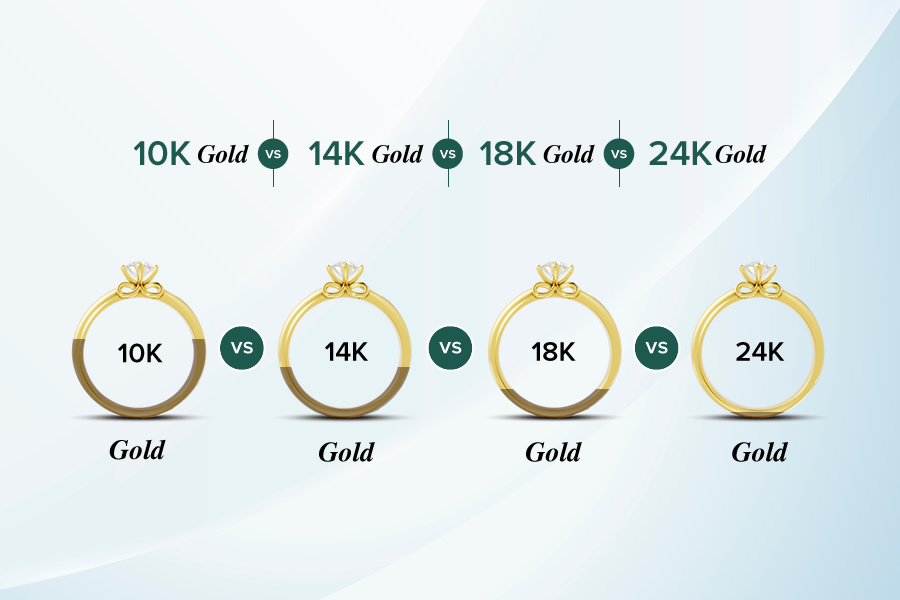
10K Gold vs 14K Gold vs 18K Gold vs 24K Gold
Introduction
While we love to adorn gold jewelry and accentuate our jewelry quotient, it’s equally important to consider the various karats it’s available in and which suits our requirement the most. Adorners of gold jewelry are always curious to get answers to their dilemma over certain questions, whether “Is 10K gold real?” followed by, “What’s the difference between 10K,14K,18K, and 24K gold?” and so on. Many people assume that higher numbers mean better quality gold, but the truth is more complex.
This detailed guide delves into every category of gold, from 10K to 24K, to help you gain insights about each precisely, thereby enabling you to make informed decisions about which gold best suits your requirements, whether that is for fashion, everyday wear, investment, or a special gift.
What is Karat (K) in Gold?
The term karat, commonly abbreviated to K, is the measure of purity of gold in a jewel. It's graded on a scale of 24. Pure gold is 24K, or 99.9% gold without any large portion of other metals mixed with it.
But pure gold is very soft and therefore not ideal for everyday wear, such as rings and chains. Lower-karat golds fill this gap. These are alloys formed by combining gold with metals such as silver, copper, zinc, or nickel, which improve strength, durability, and workability.
Here’s a quick overview:
| Karat | Gold Content | Description |
| 24K | 99.9% pure gold | Bright yellow, softest, highest value |
| 18K | 75% pure gold | Rich color, luxury jewelry |
| 14K | 58.3% pure gold | Balanced, durable, and most popular |
| 10K | 41.7% pure gold | Affordable, extremely durable |
10K Gold: Is it real?
10K gold is pure gold, although it has a lower content of pure gold than other types. It consists of 41.7% gold and 58.3% other metal components, and this makes it stronger and more resistant to scratches, bending, and warping.
Key Benefits of 10K Gold:
- Cost-Effective: Having a lesser amount of pure gold, it's cheaper, which is perfect for budget-conscious consumers.
- High Durability: The metal alloys make it extremely resistant, excellent for daily wear, particularly for rings, earrings, andn bracelets.
- Low Maintenance: 10K gold jewelry does not scratch or tarnish as quickly as higher-karat gold.
Drawbacks of 10K Gold:
- Less Luster: It possesses a pale, duller yellow color than higher karats.
- Allergic Reactions: The greater alloy content (particularly nickel) may irritate sensitive skin.
Best For:
10k gold jewelry is ideal for cost-conscious shoppers, tough everyday wear, men's jewelry, and workplace accessories.
Shop our exclusive 10k gold jewelry collection at Netcarat.
14K Gold: The Balanced All-Rounder
14K gold, which is composed of 58.3% pure gold and 41.7% alloy metals, is one of the favorite options for wedding bands and engagement rings in America.
Why choose 14K Gold?
- Strikes the Ideal Balance: Provides an adequate level of purity and strength, being tougher than 18K and more brilliant than 10K.
- Affordability without Sacrificing Elegance: More affordable compared to 18K, but still appears classy and luxurious.
- Color Variety: Comes in yellow, white, and rose gold varieties, depending on the alloy types used.
- Considerations: Slightly less than 18K but difficult to tell with the naked eye. Still likely to cause slight irritation to sensitive skin, but much less often than 10 K.
Best for:
14k old jewelry is ideal for Engagement rings, everyday-wear pendants, chains, and fashion pieces that need durability with eye appeal.
Looking for the best collection of gold jewelry in 14k gold?
18K Gold: Luxurious, Radiant & Rich
18K gold is composed of 75% gold and 25% alloys, offering a richer color shade and higher purity.
Advantages of 18K Gold:
- Visibly Luxurious: The increased gold content provides a brilliant yellow color that's ideal for making bold statements.
- Less Allergenic: Has fewer mixed metals, which makes it safe for sensitive skin.
- Suitable for Heirlooms: Resists wear and tear well and ages well with proper maintenance.
Disadvantages:
- Less Durable: Softer than 10K and 14K, so it tends to get dented or scratched easily.
- More Expensive: Least suitable for big pieces on a tight budget.
- Ideal For: 18k gold jewelry is ideal for designer pieces, wedding jewelry, heirloom jewelry, and gifts for special occasions.
24K Gold: The Purest Gold
When individuals consider pure gold, they consider 24K gold, and for good reasons. It is 99.9% pure gold, the most valuable and naturally beautiful of its kind.
Why choose 24K Gold?
- Unparalleled Purity: There is no other type of gold with purer gold.
- Harsh Yellow Color: A striking, nearly radiant yellow color that instantly becomes noticeable.
- Non-Allergenic: Because it is free from alloys, it's safe for everybody to wear.
Why It's Not Used Frequently in Jewelry:
- Very Soft: It is way too soft for quality jewelry such as rings or bracelets.
- Not Scratch Resistant: It will readily bend or get dented, making it unsuitable for everyday use.
- High Price Point: Reserved more for gold coins, bars, or ceremonial jewelry.
- Perfect For: Investment, traditional Indian jewelry, wedding gifts, collectors, and display items.
Comparison: 10K vs 14K vs 18K vs 24K Gold
| Feature | 10K Gold | 14K Gold | 18K Gold | 24K Gold |
| Purity | 41.7% | 58.3% | 75% | 99.9% |
| Durability | Very High | High | Medium | Low |
| Color | Pale Yellow | Warm Yellow | Rich Yellow | Deep Yellow |
| Skin Friendliness | Low | Medium | High | Very High |
| Price | Lowest | Moderate | High | Highest |
| Use | Daily Wear | Engagement Jewelry | Luxury Jewelry | Investment, Ceremonial |
Choosing the right Karat for Your Jewelry
Selecting the proper karat is based on your intent, budget, and personal style:
● For Everyday Use: If you want to buy gold jewelry for everyday use, you should select 10K or 14K gold, as it is strong, affordable, and low maintenance.
● For Formal Occasions: When formal occasions are your priority for adorning gold, you should opt for 18K gold as it has the best looks with a rich feel.
● For Cultural or Investment Reasons: When investment is on your mind, you can surely opt for 24K gold, particularly applicable for Indian weddings and Asian cultures.
Conclusion
So, is 10K gold real? Yes—all karats of gold are genuine, but each with varying degrees of purity, cost, and usability.
- 10K gold is ideal for strength and budget-conscious consumers.
- 14K gold provides the perfect balance of price and loveliness.
- 18K gold conveys luxury, opulence, and higher value.
- 24K gold is left to purists and collectors.
After learning the distinction between 10K, 14K, 18K, and 24K gold, you're now ready to select gold jewelry suitable for your requirements, tastes, and budget. Want to buy genuine gold jewelry? Browse our premium selection of 10K, 14K collections—carefully designed, quality-certified, and delivered with poise.
Visit today.